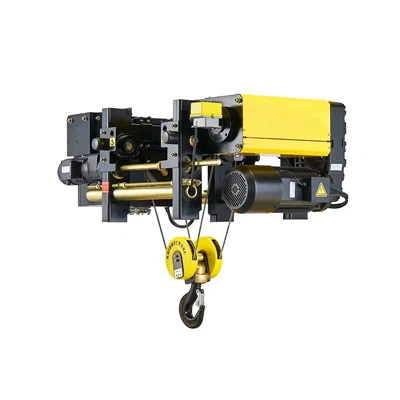
When it comes to industrial lifting equipment, electric hoists are indispensable tools across various sectors. As a leading supplier of electric hoists, I often encounter inquiries about their power consumption. Understanding the power consumption of an electric hoist is crucial for businesses aiming to optimize operational costs, enhance energy efficiency, and ensure the smooth running of their lifting operations. In this blog, we'll delve into the factors influencing an electric hoist's power consumption, how to calculate it, and some tips to reduce it.
Factors Affecting the Power Consumption of Electric Hoists
1. Hoist Capacity
The capacity of an electric hoist, which is commonly measured in tons, is one of the primary factors influencing power consumption. Heavier loads require more power to lift. For instance, a 2.5 Ton Electric Chain Hoist will generally consume more electricity than a smaller-capacity hoist when in operation. This is because the motor needs to work harder to overcome the gravitational force acting on the heavier load.
2. Lifting Height
The height to which the load is lifted also plays a significant role. The higher the lifting height, the more energy is required. Electric hoists need to continuously operate the motor to lift the load over a greater distance. Consider a high - rise construction project where materials need to be lifted to great heights; the electric hoist used will consume a substantial amount of power compared to a situation where the lifting height is only a few meters.
3. Motor Efficiency
The efficiency of the hoist's motor is crucial. A more efficient motor converts a higher percentage of electrical energy into mechanical energy for lifting, resulting in lower power consumption. Modern electric hoists are often equipped with advanced motors designed to maximize efficiency. For example, some of our European Girder Crane Electric Wire Rope Hoist models feature highly efficient motors that reduce energy waste and cut down on operational costs.
4. Duty Cycle
The duty cycle refers to the ratio of the operating time of the hoist to the total time in a given period. Electric hoists with a high duty cycle, meaning they are in operation for a more significant portion of time, will consume more power. For example, in a busy manufacturing plant where an Electric Wire Rope Hoist With Trolley 2/1 is used constantly throughout a shift, the cumulative power consumption will be higher compared to a hoist used intermittently.
5. Speed of Operation
The speed at which the hoist lifts or lowers the load affects power consumption. Faster - operating hoists generally require more power as the motor has to work more rapidly to achieve the desired speed. However, in some cases, a faster hoist can reduce the overall operating time, which may offset the increased power consumption per unit of time.
Calculating the Power Consumption of an Electric Hoist
To calculate the power consumption of an electric hoist, you need to know two main parameters: the power rating of the hoist's motor (usually given in kilowatts, kW) and the operating time. The basic formula for calculating energy consumption is:
[E = P\times t]
Where:
- (E) is the energy consumption in kilowatt - hours (kWh)
- (P) is the power rating of the motor in kilowatts (kW)
- (t) is the operating time in hours
For example, if you have a hoist with a motor power rating of 5 kW and it operates for 3 hours, the energy consumption is (E=5\space kW\times3\space h = 15\space kWh)
However, this is a simplified calculation. In real - world scenarios, factors like motor efficiency and load variations need to be considered. If the motor efficiency is, say, 80% (or 0.8), you would need to adjust the calculation. The actual power required to lift the load would be (\frac{P}{\text{efficiency}}). So, if the calculated power (P) is 5 kW, the actual power drawn from the grid would be (\frac{5}{0.8}=6.25\space kW)
Tips to Reduce Power Consumption of Electric Hoists
1. Choose the Right Hoist Capacity
Selecting an electric hoist with an appropriate capacity for your lifting needs is essential. Using an oversized hoist for light loads is inefficient as the motor will consume more power than necessary. On the other hand, an undersized hoist may struggle to lift the load, leading to overheating and increased power consumption.
2. Optimize the Lifting Process
Plan your lifting operations to minimize unnecessary lifting heights and distances. Use the hoist only when needed and avoid idling the motor. For example, if you can group similar lifting tasks together, you can reduce the number of times the hoist needs to start and stop, which can save energy.
3. Maintain the Hoist Regularly
Regular maintenance of the electric hoist ensures that all components are in good working condition. A well - maintained hoist will operate more efficiently, reducing power consumption. This includes checking the motor, lubricating moving parts, and inspecting the wiring.


4. Upgrade to Energy - Efficient Models
If you have older hoist models, consider upgrading to more energy - efficient ones. Modern hoists often incorporate advanced technologies such as variable - frequency drives (VFDs) that can adjust the motor speed according to the load, resulting in significant energy savings. Our Double Beam Wire Rope Hoist MD and European Type Chain Hoist With Electric Trolley are examples of hoists designed with energy efficiency in mind.
Conclusion
As a supplier of electric hoists, we understand that power consumption is a critical concern for our customers. By understanding the factors that affect power consumption, calculating it accurately, and implementing energy - saving measures, businesses can reduce their operational costs and contribute to a more sustainable environment.
If you're in the market for an electric hoist or looking to upgrade your existing equipment, we're here to help. Our team of experts can assist you in selecting the right hoist for your specific needs and provide guidance on optimizing its energy efficiency. Contact us today to start a conversation about your lifting requirements and how we can help you achieve your goals.
References
- "Industrial Electric Hoist Handbook", Industry Press, 20XX
- "Energy Efficiency in Lifting Equipment", International Energy Agency, 20XX