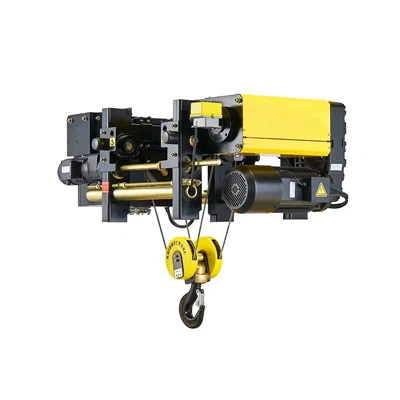
Hey there! If you’re in the market for lifting equipment, you’ve probably come across terms like European Type Hoist and wondered what makes them stand out from, say, older American-style hoists. As a supplier of these bad boys, I get asked all the time about the little (but super important) details that affect how they perform in real-world settings. One question that pops up again and again? Voltage fluctuation. Let’s break that down—because it’s not just a “power thing”; it directly impacts how your hoist works, how long it lasts, and whether you’re spending more time fixing it than actually lifting stuff.
First off, let’s keep it simple for anyone who’s not an electrical engineer (I’m right there with you on that). Voltage fluctuation is basically when the power going to your hoist’s motor isn’t a steady, consistent number. Most industrial setups in Europe run on 400V three-phase power, right? But things like heavy machinery turning on/off, grid repairs, or even long power lines can make that voltage swing up or down—think 350V one minute, 430V the next. It’s not just a “minor blip”; that fluctuation doesn’t play nice with European Electric Wire Rope Hoist components, and here’s why.
Let’s start with the motor—because that’s the heart of any hoist. European Type Hoists use high-efficiency, three-phase induction motors, which are designed to run optimally at a specific voltage. When voltage drops below the rated amount, the motor has to work way harder to generate the same amount of torque (that’s the twisting force needed to lift heavy loads). It’s like trying to push a car up a hill with one leg tied behind you—you’re going to overwork yourself fast. Over time, that extra strain causes overheating, which burns out the motor’s windings. I’ve seen this firsthand with a client in Berlin who skipped power stabilization because they thought “it was fine”… their European Girder Crane Electric Wire Rope Hoist motor died in 18 months instead of the expected 10 years. Yikes.
What about when voltage spikes too high? That’s another side of the coin. Surges can fry sensitive electronic parts—like the variable frequency drives (VFDs) that control the hoist’s speed and precision. European hoists are known for their smooth, accurate lifting, right? A spike can make the VFD misread signals, leading to jerky movements, unexpected stops, or even full-on control failure. I had a customer in Milan call me in a panic last year because their hoist was lurching mid-lift of a 5-ton steel beam—turns out a nearby factory’s new press was causing constant voltage surges. We had to replace the VFD and add surge protectors, which cost them way more upfront than if they’d addressed the fluctuation early.
Now, let’s talk about the structural stuff—wait, does voltage fluctuation even affect that? You bet. When the motor’s working harder (because of low voltage), it’s putting uneven stress on the hoist’s load chain, gears, and brake system. Brakes are super critical on any hoist—they have to hold that load steady, no matter what. If the motor is drawing extra current to compensate for low voltage, the brake might not engage properly (or engage too harshly, causing wear and tear on the drum or chain). A client in Rotterdam told us their load chain was breaking every few months—we checked the power, found 30% voltage drop, fixed that, and the chain hasn’t broken in over two years. That’s not a small deal—load chain failures can lead to serious safety issues, not to mention costly downtime.
Here’s the thing: European Type Hoists are built to be efficient, compact, and reliable, but they’re not invincible. They’re designed for consistent power supply—so when that’s disrupted, even the best components can’t keep up. I’ve had suppliers tell me “our hoists are built to handle voltage swings” but in my experience, that’s only true for small, short blips (like a second or two). Long-term fluctuation, or swings over 10% of the rated voltage? That’s where problems start happening.
So what can you do about it? First, get your power supply tested. There are affordable tools that check voltage consistency in your facility. If you find fluctuation, invest in power stabilization equipment—like voltage regulators or uninterruptible power supplies (UPS) for your hoist. It might feel like an extra cost upfront, but trust me, it’s way cheaper than replacing motors, VFDs, or load chains every couple of years. Also, when you’re picking a hoist, make sure it’s rated for the voltage conditions in your specific location. Some regions have more volatile power than others, so working with a supplier who knows European hoists inside and out (like me) helps you pick the right model for your setup.


Let me circle back to why this matters so much for European-style hoists specifically. Unlike older, bulkier hoists that were built to handle more rough-and-tumble power, modern European designs prioritize efficiency—smaller motors, lighter frames, smarter electronics. That’s great for energy bills, but it means they’re more sensitive to power inconsistencies. I see a lot of business owners get caught up in the specs (lift height, load capacity) and forget the “behind-the-scenes” stuff like power quality. That’s where the mistakes happen.
If you’re currently dealing with a hoist that’s acting up—jerky movements, frequent breakdowns, overheating motors—don’t just keep replacing parts. Look at the power. And if you’re in the market for a new European Type Hoist, don’t sleep on asking about how it handles voltage fluctuations. At the end of the day, your hoist is only as good as the power feeding it. It’s the quiet factor that makes all the difference between a hoist that works for you and one that works against you.
Want to chat more about how voltage fluctuation is affecting your lifting setup? I’m here to help—whether you’re troubleshooting a current issue or picking out a new European Electric Wire Rope Hoist that’s built for your power conditions. Reach out anytime to connect for a friendly, no-pressure chat about your hoist needs.
References
- European Commission. (2022). Industrial Power Quality Guidelines for Low-Voltage Grids. European Commission Enterprise and Industry Directorate-General.
- Hoist Manufacturers Institute (HMI). (2021). Technical Report: Performance of Electric Wire Rope Hoists Under Voltage Variation. HMI Standard 12.
- International Electrotechnical Commission (IEC). (2020). IEC 60204-32: Safety of Machinery – Electrical Equipment of Machines – Part 32: Lifting Appliances.