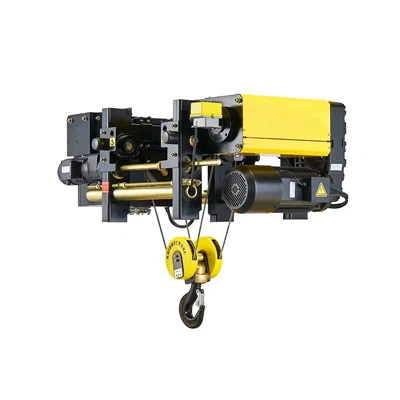
If you’ve ever worked backstage at a concert, theater production, or live event, you know the chaos of moving heavy sets, lights, and props fast. Ten years ago, I was on a tour crew for a mid-level band—we spent hours hauling 1000-pound trusses with manual chain hoists, blisters on our hands, and sweating through our vests before even the first soundcheck. Now? I run a stage chain hoist supply company, and I swear by automated stage chain hoists for every client we work with. If you’re still relying on manual hoists or even old, clunky semi-automated ones, let me break down why making the switch is a game-changer—no corporate jargon, just real world stuff we’ve seen day in and day out.
First off, safety is non-negotiable in live events. I can’t tell you how many times I watched a crew member strain to yank a manual hoist, their arm shaking, because a set piece was just a little too heavy or the load was off balance. Manual hoists rely 100% on human strength, and even the strongest person can slip, miscalculate, or get tired halfway through a lift—especially when you’re doing this 10 times a night for a week straight. Automated stage chain hoists? They’re built with built-in overload protection that kicks in before you even risk damaging the hoist or the load. One of our most popular models for mid-sized venues is the D8+ Electric Stage Hoist 500kg 1000kg 2000kg line, and our clients love that it has a load cell that stops lifting if the weight is even 5% over the rated limit. No more guessing how much a backdrop or lighting rig weighs—this thing measures it for you. Also, it has a slow-start function, so you don’t get that jarring jolt when the load leaves the ground, which is perfect for fragile sets like glass panels or custom props. Back in my crew days, I saw a guy yank a manual hoist too hard, a light truss swung into a speaker stand, and that set us back two hours. Automated hoists eliminate that kind of human error, plain and simple.
Then there’s speed and efficiency—live events move fast, and delays kill budgets. When you’re setting up a stage for a 90-minute show, every minute you waste on rigging is less time for sound checks, rehearsals, or even the artist’s downtime. Let’s compare: moving a single 1000kg truss with a manual hoist takes about 10 minutes for two crew members to position, crank, and lock in place. With an automated hoist? It takes 2 minutes. You can program exact lift heights into the control panel, so you don’t have to climb a ladder to adjust a chain every time. This is where Chain Hoist Stage Truss Lifting Motors come in—our truss-specific motors are designed to handle multiple lifts at once, so you can sync 4 hoists to lift a big stage grid in one go instead of doing each section separately. We had a theater client last year who was putting on a production with 12 moving set pieces; before they automated, rigging took 8 hours. After switching to our chain hoist stage motors, they cut that time to 2.5 hours, which let them add an extra rehearsal slot and fix a lighting issue they’d been putting off. For tour crews, this is huge—less time spent rigging means more time to prep for the show, and less time rushing leads to fewer mistakes.
Wait, and let’s talk about consistency. If you’re running a tour or a venue with regular shows, you want every setup to be the same, right? No one wants a backdrop that’s 6 inches higher one night than the next. Manual hoists are impossible to get precise—even if two crew members crank the same number of links, one might pull tighter than the other. Automated hoists let you program repeatable lift heights and speeds, so every lift is exactly where it needs to be. That’s why Entertainment Chain Hoist Stage Equipment is such a go-to for us when clients need reliable, repeatable performance for weekly residencies or festival runs. Our clients using these hoists for Las Vegas residencies tell me they can set up the stage in the same 3 hours every single week, no adjustments needed. No more adjusting a light rig 10 times because it’s not level—automated hoists do the heavy lifting (literally) to keep everything consistent.
Adaptability is another big one. Stages aren’t one-size-fits-all. A small black box theater needs a different setup than a 20,000-seat arena, and you might need to swap out props or set pieces mid-show for a performance. Automated stage chain hoists are way more flexible than manual ones or even larger hydraulic lifts. For example, our Electric Stage Hoist For Lifting Aluminum Truss is built with variable speed control, so you can lift a delicate aluminum truss slowly and lower it fast when you’re tearing down. It also works with our wireless control systems, so you can operate it from the floor, the sound booth, or even backstage—no need to tie a crew member up on a lift or a ladder during a quick change. We had a client do a pop-up festival last summer where they had to swap out 5 different set pieces between acts in 10 minutes each. With manual hoists, that would’ve been impossible. With our automated chain hoists, their crew finished every swap with 2 minutes to spare, and the artist didn’t have to wait around on stage. This flexibility also means you don’t have to buy a bunch of different equipment for different jobs—our standard Chain Hoist Stage models work for trusses, backdrops, lighting, props, even set pieces like sofas or fake walls.
I know what some of you are thinking: “Automated stuff is expensive, right?” Yeah, upfront it’s more than a manual hoist, but let’s do the math. Manual hoists need regular maintenance—lubricating the chain, checking the gears, replacing parts when crew abuse them. Also, you have to factor in labor: you need two people per manual lift, and that’s two people who could be doing other jobs, like managing the crowd or working on sound. Automated hoists only need one person to operate the control panel, so you cut down on labor costs long-term. Also, the safety aspect: if a crew member gets injured using a manual hoist, that’s workers’ comp, lost time, maybe even downtime for your event. Automated hoists lower that risk, so you avoid those hidden costs. One of our small theater clients in Ohio told us they saved $15,000 last year after switching—they stopped paying for temporary crew for rigging shifts, and they didn’t have to cover a $8,000 workers’ comp claim when a crew member threw out their back hauling a set piece. That’s a no-brainer, if you ask me.
Now, I’m not here to say automated hoists are perfect. You still need to do regular checks—make sure the chain isn’t frayed, the control panel has fresh batteries, all the connections are tight. But that’s way less maintenance than manual hoists. And for smaller events? If you’re doing a one-off wedding or a small community play, maybe a manual hoist works. But if you’re doing 10+ shows a month, working in arenas or theaters, or moving heavy loads on a regular basis, automated is the way to go.


At the end of the day, stage work is all about making the show go on. The last thing you need is a hoist that slows you down, endangers your crew, or makes your set look inconsistent. I’ve seen too many good shows go south because of rigging issues, and switching to automated stage chain hoists is the easiest way to avoid that. If you’re tired of the blisters, the delays, and the stress of manual rigging, we can hook you up with the right model for your space and your needs—whether you need a single Chain Hoist Stage for a small theater or a whole system of Entertainment Chain Hoist Stage Equipment for a tour. Just reach out, and we can chat through your setup, show you how our hoists work, and help you figure out what makes sense for your budget. Don’t let rigging hold your show back—upgrade today.
References
- Event Safety Alliance. (2021). Rigging Safety Guidelines for Live Performance Spaces. Retrieved from eventalliance.org/safety-resources/rigging-guidelines
- Stage Directions Magazine. (2022). "Automated Hoists: The Backstage Game-Changer." Retrieved from stagedirections.com/features/automated-hoists-2022
- North American Equipment Association. (2023). Efficiency Metrics for Live Event Rigging Equipment. Retrieved from naea.org/equipment-metrics/rigging