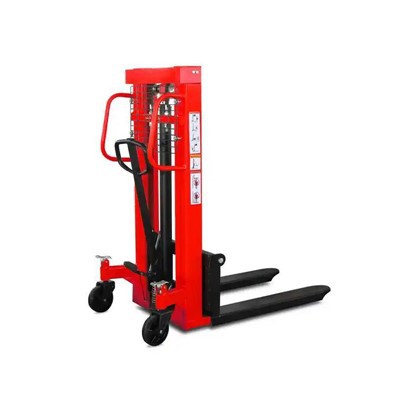
As a supplier of the Manual Stacker 4m, I often get asked about the materials used in the forks of this equipment. The forks of a Manual Stacker 4m are a critical component, as they directly interact with the loads being lifted and stacked. Understanding the materials that make up these forks is essential for ensuring the safety, durability, and performance of the stacker.

The Importance of Fork Materials
The forks of a Manual Stacker 4m are subjected to significant stress and strain during normal operation. They must be able to support heavy loads without bending, breaking, or deforming. The choice of material for the forks is therefore crucial, as it determines the strength, toughness, and wear resistance of the forks.
In addition to strength and durability, the material of the forks also affects the overall weight of the stacker. A lighter fork can make the stacker easier to maneuver, especially in tight spaces. However, it is important to balance the weight of the forks with their strength and load-bearing capacity.
Common Materials Used in Forks
There are several materials commonly used in the manufacture of forks for Manual Stacker 4m. Each material has its own unique properties and advantages, and the choice of material depends on a variety of factors, including the intended use of the stacker, the load capacity requirements, and the budget.
Steel
Steel is one of the most commonly used materials for forks in Manual Stacker 4m. It is known for its high strength, toughness, and wear resistance. Steel forks can withstand heavy loads and repeated use without losing their shape or strength. They are also relatively easy to manufacture and can be heat-treated to further enhance their properties.
There are different types of steel used in fork manufacturing, including carbon steel and alloy steel. Carbon steel is a common choice due to its affordability and good mechanical properties. Alloy steel, on the other hand, contains additional elements such as chromium, nickel, and molybdenum, which improve its strength, hardness, and corrosion resistance.
Stainless Steel
Stainless steel is another popular material for forks, especially in applications where corrosion resistance is a concern. Stainless steel forks are resistant to rust and staining, making them suitable for use in wet or corrosive environments, such as food processing plants, chemical industries, and marine applications.
Stainless steel forks are typically made from austenitic stainless steel, which has good ductility, toughness, and corrosion resistance. They are more expensive than carbon steel forks, but their long-term durability and resistance to corrosion make them a cost-effective choice in many applications.
Aluminum
Aluminum is a lightweight material that is sometimes used in the manufacture of forks for Manual Stacker 4m. Aluminum forks are significantly lighter than steel forks, which can make the stacker easier to maneuver and reduce the overall weight of the equipment.
However, aluminum forks have lower strength and load-bearing capacity compared to steel forks. They are typically used in applications where the loads are relatively light and the emphasis is on ease of use and portability. Aluminum forks are also more prone to damage and deformation, so they may not be suitable for heavy-duty applications.
Factors Affecting Material Selection
When selecting the material for the forks of a Manual Stacker 4m, several factors need to be considered:

Load Capacity
The load capacity of the stacker is one of the most important factors in determining the material of the forks. Forks made from high-strength steel are typically used for heavy-duty applications with high load capacities. For lighter loads, aluminum or stainless steel forks may be sufficient.
Environment
The operating environment of the stacker also plays a role in material selection. If the stacker will be used in a corrosive environment, such as a chemical plant or a food processing facility, stainless steel forks are a better choice due to their corrosion resistance. In dry and non-corrosive environments, carbon steel forks may be more cost-effective.
Cost
Cost is always a consideration when selecting materials. Steel forks are generally more affordable than stainless steel or aluminum forks. However, the long-term cost of ownership, including maintenance and replacement costs, should also be taken into account.
Our Product Range
As a supplier of Manual Stacker 4m, we offer a range of stackers with forks made from different materials to meet the diverse needs of our customers. Our 2 Ton Manual Stacker Hydraulic is equipped with high-strength steel forks, making it suitable for heavy-duty applications. The Manual Stacker forklift is available with both steel and stainless steel forks, depending on the customer's requirements. And our Manual Stacker for 2500kg offers a combination of strength and durability for medium to heavy loads.

Contact Us for Procurement
If you are interested in purchasing a Manual Stacker 4m or have any questions about the materials used in our forks, please feel free to contact us. Our team of experts is ready to assist you in selecting the right stacker for your specific needs. We can provide detailed information about our products, including material specifications, load capacities, and pricing.
We understand that choosing the right stacker is an important decision, and we are committed to providing you with the best products and services. Whether you are a small business looking for a reliable stacker for light-duty use or a large industrial company in need of a heavy-duty solution, we have the expertise and experience to meet your requirements.
References
- Machinery's Handbook, 31st Edition, Industrial Press Inc.
- Handbook of Materials Selection, by Michael F. Ashby
This blog provides a comprehensive overview of the materials used in the forks of a Manual Stacker 4m. By understanding the properties and advantages of different materials, you can make an informed decision when selecting a stacker for your business. If you have any further questions or need more information, please do not hesitate to contact us.