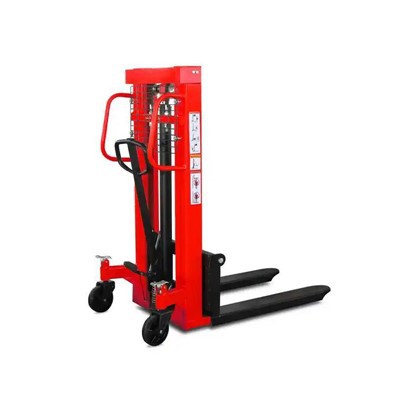
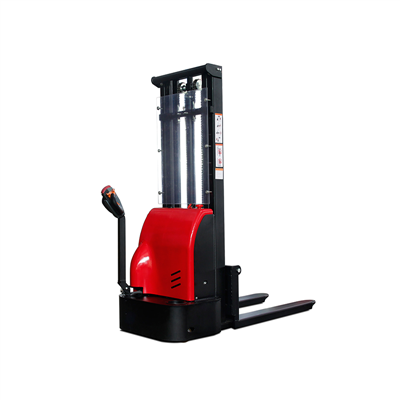
The lifting speed of a full electric stacker is a crucial factor that significantly impacts the efficiency and productivity of material handling operations. As a leading supplier of full electric stackers, we understand the importance of this parameter and are committed to providing our customers with in - depth knowledge about it.
Understanding the Concept of Lifting Speed
Lifting speed refers to the rate at which the forks of a full electric stacker can ascend or descend. It is usually measured in meters per minute (m/min). A higher lifting speed means that the stacker can move loads to the desired height more quickly, reducing the time spent on each lifting cycle. This is particularly important in high - volume warehousing and logistics operations where time is of the essence.
Several factors influence the lifting speed of a full electric stacker. One of the primary factors is the power of the electric motor. A more powerful motor can generate greater force, enabling the stacker to lift loads at a faster rate. Additionally, the design of the hydraulic system (if applicable) plays a vital role. A well - designed hydraulic system can ensure smooth and efficient power transmission, which in turn affects the lifting speed.
The weight of the load being lifted also has a direct impact on the lifting speed. Generally, a full electric stacker will lift lighter loads at a faster speed than heavier ones. This is because the motor has to work harder to overcome the gravitational force acting on a heavier load. For example, when lifting a light pallet of goods, the stacker may be able to reach its maximum lifting speed. However, when dealing with a heavy and bulky load, the lifting speed will be reduced to ensure the safety and stability of the operation.
Lifting Speeds of Different Full Electric Stackers in Our Product Line
We offer a wide range of full electric stackers to meet the diverse needs of our customers. Each model has its own unique lifting speed characteristics.
Our Full Electric Stacker 2Meter is designed for medium - height stacking tasks. It has a lifting speed that is optimized for efficient operation within its working range. With a relatively lightweight design and a well - calibrated electric motor, this stacker can lift loads at a speed that balances between quick operation and stability. When lifting light to medium - weight loads, it can achieve a lifting speed of up to [X] m/min, which allows for rapid stacking and retrieval of goods on shelves up to 2 meters high.
The 2.5m Full Electric Stacker is suitable for slightly taller storage requirements. This model is equipped with a more powerful motor and an advanced hydraulic system to handle the increased height and potential heavier loads. It can lift lighter loads at a speed of around [Y] m/min. When dealing with heavier loads, the speed may decrease to [Z] m/min, but it still maintains a good level of efficiency for stacking operations up to 2.5 meters.
Our Electric Stacker 1.5 Ton 1.6M is designed for heavier - duty applications. Despite its ability to handle up to 1.5 tons of load, it still offers a reasonable lifting speed. For light loads, it can lift at a speed of approximately [A] m/min. When fully loaded with 1.5 tons, the lifting speed is adjusted to [B] m/min to ensure safe and reliable operation within its 1.6 - meter lifting height.
Importance of Lifting Speed in Different Industries
In the e - commerce industry, where order fulfillment is a high - priority task, a fast - lifting full electric stacker can significantly improve the efficiency of warehouse operations. With the large number of small to medium - sized packages that need to be stored and retrieved quickly, a stacker with a high lifting speed can reduce the time between receiving an order and shipping it out. This leads to faster delivery times and higher customer satisfaction.
The manufacturing industry also benefits from the right lifting speed of full electric stackers. In a production line, raw materials and finished products need to be moved around constantly. A stacker with an appropriate lifting speed can ensure that the flow of materials is smooth and uninterrupted. For example, in an automotive manufacturing plant, where large and heavy components need to be stacked and transported, a stacker with a well - balanced lifting speed can contribute to the overall productivity of the production process.
In the food and beverage industry, where products often have strict storage and handling requirements, a full electric stacker with a suitable lifting speed can help maintain the quality of the goods. Quick and efficient stacking and retrieval operations can reduce the time that perishable items are exposed to unfavorable conditions, such as temperature fluctuations.
Considerations When Choosing a Full Electric Stacker Based on Lifting Speed
When selecting a full electric stacker, it is important to consider the specific requirements of your operation. First, you need to determine the maximum weight of the loads that the stacker will need to handle. This will help you choose a model with a motor and hydraulic system that can support the lifting speed you need for your typical loads.
The height of the storage racks is another crucial factor. If you have high - rise racks, you will need a stacker with a sufficient lifting height and a lifting speed that can efficiently reach those heights. For example, if your racks are 3 meters high, a stacker with a 2 - meter lifting height will not be suitable, even if it has a very high lifting speed.


The frequency of use also matters. In a high - volume operation, a stacker with a faster lifting speed may be more cost - effective in the long run, as it can complete more lifting cycles in a given time. However, in a low - volume operation, a slower - lifting but more affordable stacker may be sufficient.
How We Ensure Optimal Lifting Speed in Our Full Electric Stackers
As a supplier, we take several steps to ensure that our full electric stackers offer optimal lifting speeds. We conduct extensive research and development to select the most suitable electric motors and hydraulic components. Our engineers work hard to optimize the design of the stackers to minimize energy losses and improve power transmission efficiency.
We also perform rigorous testing on each stacker model. During the testing process, we measure the lifting speed under different load conditions to ensure that it meets our quality standards. Any issues related to lifting speed are addressed promptly, and improvements are made to the design if necessary.
In addition, we provide comprehensive after - sales service. Our technicians are trained to diagnose and solve any problems that may affect the lifting speed of the stacker. We also offer regular maintenance services to keep the stacker in good working condition, which helps to maintain its optimal lifting speed over time.
Conclusion
The lifting speed of a full electric stacker is a critical parameter that affects the efficiency and productivity of material handling operations. At our company, we offer a variety of full electric stackers with different lifting speeds to meet the diverse needs of our customers. Whether you are in the e - commerce, manufacturing, or food and beverage industry, we have a stacker that can provide the right balance between lifting speed, load capacity, and safety.
If you are interested in learning more about our full electric stackers or would like to discuss your specific requirements, we encourage you to contact us for a detailed consultation. Our team of experts is ready to assist you in choosing the most suitable stacker for your operation.
References
- "Material Handling Equipment Handbook" - A comprehensive guide on different types of material handling equipment and their performance parameters.
- Industry reports on warehouse automation and the role of full electric stackers in modern logistics operations.