As a supplier of manual stackers, I've witnessed firsthand the critical role these machines play in various industries. Manual stackers are indispensable tools for material handling, offering a cost - effective and reliable solution for lifting and moving goods. However, one issue that often arises is overloading, which can have far - reaching consequences. In this blog, I'll delve into the effects of overloading a manual stacker and why it's crucial to operate within the specified load limits.
Structural Damage
One of the most immediate and obvious effects of overloading a manual stacker is structural damage. Manual stackers are engineered to handle specific weight capacities, and exceeding these limits puts excessive stress on the machine's components. The frame, forks, and hydraulic system are particularly vulnerable.
The frame of a manual stacker is designed to support the load evenly. When overloaded, the frame may bend or warp. This not only compromises the stacker's stability but also affects its overall functionality. A bent frame can cause the forks to become misaligned, making it difficult to lift and stack pallets properly. For instance, if a 1ton Manual Stacker is overloaded with a 1.5 - ton load, the frame may start to show signs of stress, such as cracks or visible deformation.
The forks are another critical component. They are responsible for holding the load securely. Overloading can cause the forks to bend or break. A bent fork can lead to uneven weight distribution on the pallet, increasing the risk of the load slipping off during lifting or transportation. This not only endangers the operator but also the surrounding environment.
The hydraulic system of a manual stacker is designed to lift and lower the load smoothly. Overloading can put excessive pressure on the hydraulic cylinders, seals, and hoses. This can lead to hydraulic fluid leaks, which not only reduce the efficiency of the stacker but also pose a safety hazard. In severe cases, the hydraulic system may fail completely, rendering the stacker inoperable.
Reduced Lifespan
Overloading a manual stacker significantly reduces its lifespan. Every time a stacker is overloaded, it experiences wear and tear at an accelerated rate. The components that are under excessive stress are more likely to fail prematurely.
For example, the bearings in the wheels and the mast of the stacker are designed to handle a certain amount of weight. When overloaded, the bearings may wear out faster, leading to increased friction and noise. This can eventually cause the wheels to seize up or the mast to become difficult to operate.
The hydraulic pump, which is responsible for generating the pressure needed to lift the load, also suffers from overloading. The pump has to work harder to lift the excessive weight, which can cause the internal components to wear out. This may result in reduced pumping efficiency and, ultimately, the need for costly repairs or replacement.
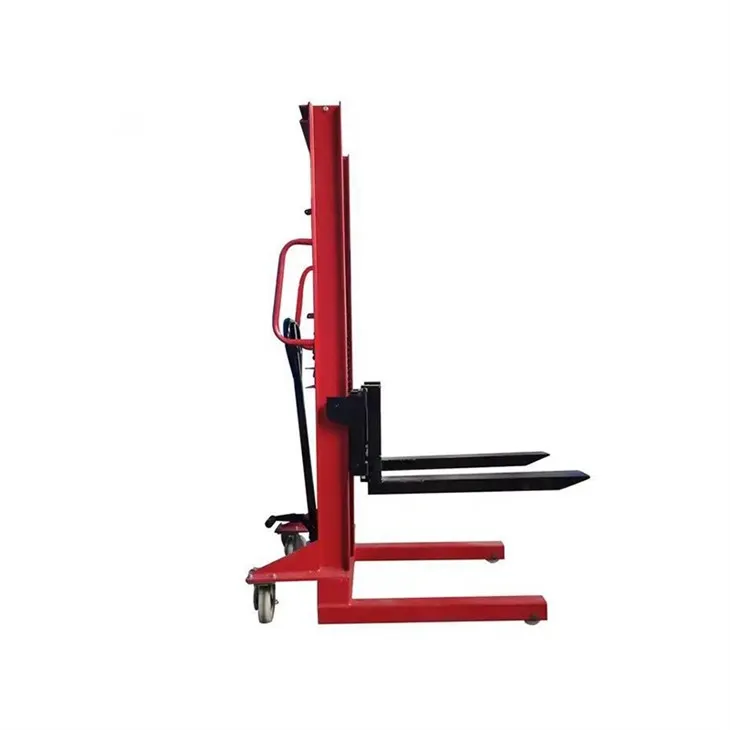

If a company continuously overloads its Manual Stackershand Forklift Manual Stacker, it will find itself spending more money on maintenance and replacement parts in the long run. This not only increases the operational costs but also disrupts the workflow as the stacker may be out of service for extended periods.
Safety Risks
Overloading a manual stacker poses significant safety risks to the operator and the surrounding environment. A stacker that is overloaded is more likely to tip over. The center of gravity of the stacker shifts when it is carrying a load that exceeds its capacity. This makes the stacker unstable, especially when turning or moving on an uneven surface.
An overloaded stacker can also cause the load to fall. As mentioned earlier, the forks may bend or break under excessive weight, and the load may slip off. A falling load can cause serious injuries to the operator or other workers in the vicinity. It can also damage the goods being transported and the surrounding equipment.
In addition, the overstressed components of the stacker, such as the hydraulic hoses and seals, may fail suddenly. This can lead to unexpected movements of the stacker, such as the forks dropping suddenly or the stacker jerking forward or backward. These sudden movements can catch the operator off - guard and result in accidents.
Decreased Efficiency
Overloading a manual stacker also leads to decreased efficiency. When a stacker is overloaded, it takes longer to lift and lower the load. The hydraulic system has to work harder to move the excessive weight, which slows down the operation. This can lead to longer cycle times and reduced productivity.
Moreover, an overloaded stacker is more difficult to maneuver. The increased weight makes it harder to turn the stacker and navigate through narrow aisles. This can cause delays in material handling operations and disrupt the overall workflow. For example, in a warehouse where time is of the essence, an overloaded Manual Stacker for 2500kg can slow down the entire operation, leading to missed deadlines and lost opportunities.
Compliance Issues
Operating a manual stacker beyond its load capacity can also lead to compliance issues. Many industries are subject to safety regulations and standards regarding the use of material handling equipment. Overloading a stacker violates these regulations and can result in fines and penalties.
Companies are required to ensure that their equipment is used safely and within the specified limits. Failure to do so can also lead to legal liabilities in case of accidents. Insurance companies may also be reluctant to provide coverage for equipment that is being used in an unsafe manner.
How to Avoid Overloading
To avoid the negative effects of overloading, it is essential to follow the manufacturer's guidelines. Each manual stacker comes with a specified load capacity, and this should never be exceeded. Operators should be trained to properly assess the weight of the load before lifting it.
Regular maintenance of the manual stacker is also crucial. This includes checking the condition of the frame, forks, hydraulic system, and other components. Any signs of wear or damage should be addressed immediately.
In addition, companies should invest in the right type of manual stacker for their specific needs. If the workload requires lifting heavier loads, a stacker with a higher load capacity should be considered.
Conclusion
As a manual stacker supplier, I understand the importance of using these machines safely and efficiently. Overloading a manual stacker can have serious consequences, including structural damage, reduced lifespan, safety risks, decreased efficiency, and compliance issues. By following the manufacturer's guidelines, providing proper training to operators, and investing in the right equipment, companies can avoid these problems and ensure the smooth operation of their material handling processes.
If you're in the market for a reliable manual stacker or have any questions about our products, I encourage you to reach out for a procurement discussion. We're here to help you find the best solution for your material handling needs.
References
- OSHA (Occupational Safety and Health Administration) guidelines on material handling equipment.
- Manufacturer's manuals for manual stackers.
- Industry research on the effects of overloading material handling equipment.