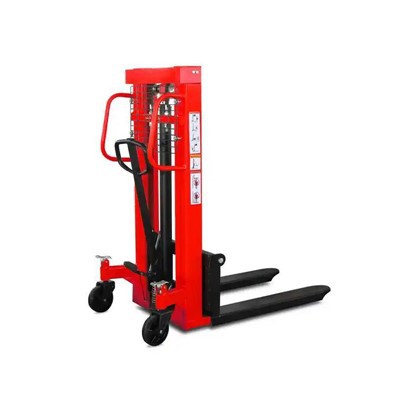
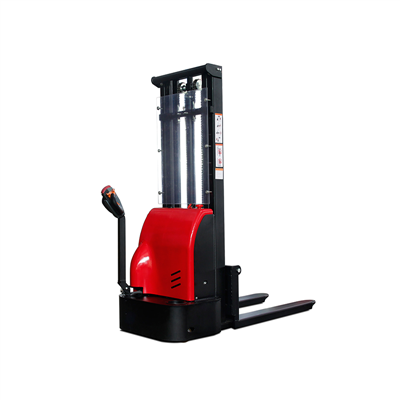
As a supplier of full electric stackers, I often encounter customers who are confused about the differences between counterbalanced and non - counterbalanced full electric stackers. In this blog, I will explain these differences in detail to help you make a more informed decision when choosing the right stacker for your business.
1. Basic Structure and Working Principle
Counterbalanced Full Electric Stacker
A counterbalanced full electric stacker is designed with a counterweight at the rear of the machine. This counterweight is crucial as it offsets the weight of the load being lifted at the front. When the forks are raised with a load, the counterweight prevents the stacker from tipping forward. The weight of the counterweight is carefully calculated based on the maximum load capacity of the stacker.
The working principle of a counterbalanced stacker is relatively straightforward. The electric motor powers the hydraulic pump, which in turn raises and lowers the forks. The operator controls the movement of the stacker using a control handle, which allows for forward, backward, and turning movements.
Non - Counterbalanced Full Electric Stacker
In contrast, a non - counterbalanced full electric stacker does not have a rear counterweight. Instead, it relies on the load being placed on the forks within a specific area close to the front wheels. This type of stacker has a more compact design, which makes it suitable for use in narrow aisles and confined spaces.
The non - counterbalanced stacker also uses an electric motor to power the hydraulic system for lifting and lowering the forks. However, due to the lack of a counterweight, it has a more limited load - carrying capacity compared to counterbalanced stackers.
2. Load Capacity
Counterbalanced Full Electric Stacker
Counterbalanced stackers generally have a higher load capacity. They can handle loads ranging from 1 to 3 tons or even more, depending on the model. This makes them ideal for applications where heavy loads need to be lifted and moved, such as in large warehouses, manufacturing plants, and distribution centers.
For example, in a steel manufacturing plant, a counterbalanced full electric stacker can easily lift and transport large coils of steel, which can weigh several tons. The counterweight ensures the stability of the stacker even when carrying these heavy loads.
Non - Counterbalanced Full Electric Stacker
Non - counterbalanced stackers typically have a lower load capacity, usually ranging from 0.5 to 1.5 tons. Their design, which lacks a counterweight, limits the amount of weight they can safely carry. However, for smaller businesses or applications where lighter loads are involved, such as in a small retail store or a workshop, a non - counterbalanced stacker can be a cost - effective and practical solution.
3. Maneuverability
Counterbalanced Full Electric Stacker
Counterbalanced stackers are less maneuverable in tight spaces due to their larger size and the presence of the counterweight. They require more space to turn and operate, especially when carrying a load. In a warehouse with narrow aisles, a counterbalanced stacker may have difficulty navigating, and it may be necessary to widen the aisles to accommodate it.
However, on open floors or in areas with sufficient space, counterbalanced stackers offer smooth and stable operation. They can be used to transport loads over longer distances without any significant issues.
Non - Counterbalanced Full Electric Stacker
Non - counterbalanced stackers excel in maneuverability. Their compact design allows them to operate in narrow aisles as small as 1.5 to 2 meters wide. This makes them perfect for high - density storage systems, where space utilization is crucial.
For instance, in a cold storage warehouse where space is at a premium, a non - counterbalanced full electric stacker can easily access pallets stored in narrow aisles, maximizing the storage capacity of the facility.
4. Floor Requirements
Counterbalanced Full Electric Stacker
Counterbalanced stackers require a relatively flat and solid floor surface. The weight of the counterweight and the load can put significant pressure on the floor, and uneven or weak floors may cause the stacker to become unstable or even damage the floor. Therefore, in facilities where counterbalanced stackers are used, the floors need to be properly reinforced and maintained.
Non - Counterbalanced Full Electric Stacker
Non - counterbalanced stackers are more forgiving when it comes to floor conditions. Their lighter weight and more evenly distributed load mean that they can operate on a wider range of floor surfaces, including slightly uneven or less - than - perfect floors. This makes them a more versatile option for businesses with different floor types.
5. Cost
Counterbalanced Full Electric Stacker
Counterbalanced stackers are generally more expensive than non - counterbalanced stackers. The cost of manufacturing a counterbalanced stacker is higher due to the need for a counterweight and a more robust structure to support higher loads. Additionally, the maintenance costs may also be higher, as the counterweight and other components may require more frequent inspection and servicing.
Non - Counterbalanced Full Electric Stacker
Non - counterbalanced stackers are more cost - effective. Their simpler design and lower load capacity result in a lower purchase price. They also have lower maintenance costs, making them an attractive option for small and medium - sized businesses with budget constraints.
6. Applications
Counterbalanced Full Electric Stacker
- Warehousing and Distribution: In large warehouses, counterbalanced stackers are used to load and unload trucks, move pallets within the warehouse, and stack goods on high shelves.
- Manufacturing: They are suitable for transporting heavy raw materials and finished products within a manufacturing plant. For example, in an automotive manufacturing plant, counterbalanced stackers can move engine blocks and other heavy components.
- Logistics: Counterbalanced stackers play a vital role in logistics centers, where they handle large volumes of goods for shipping and receiving.
Non - Counterbalanced Full Electric Stacker
- Retail Stores: Non - counterbalanced stackers are commonly used in retail stores to restock shelves and move inventory in the backroom. Their compact size allows them to operate in the limited space available in these environments.
- Small Workshops: In small workshops, they can be used to move light - duty materials and tools around the workspace.
- Cold Storage Facilities: As mentioned earlier, their ability to operate in narrow aisles makes them ideal for cold storage warehouses, where space is limited and efficient storage is essential.
Conclusion
In summary, the main differences between counterbalanced and non - counterbalanced full electric stackers lie in their structure, load capacity, maneuverability, floor requirements, cost, and applications. When choosing a full electric stacker for your business, it is important to consider your specific needs, such as the type and weight of the loads you need to handle, the available space in your facility, and your budget.


As a full electric stacker supplier, we offer a wide range of products to meet your diverse requirements. You can explore our Full Electric Stacker Self Lift Stacker, Electric Lifter Trolley Full Electric Stacker, and Full Electric Stacker 2M For Sale on our website.
If you are interested in learning more about our products or have any questions regarding the selection of the right stacker for your business, please feel free to contact us for a detailed discussion and a customized solution. We are committed to providing you with high - quality stackers and excellent after - sales service.
References
- "Material Handling Equipment Handbook"
- Industry reports on full electric stackers