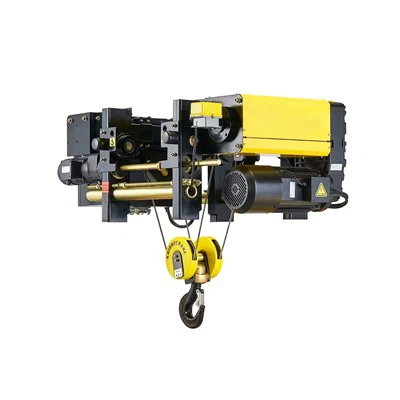
In the realm of industrial equipment, the European Type Hoist stands out as a reliable and efficient lifting solution. As a reputable European Type Hoist supplier, we understand the critical importance of ensuring the structural integrity of these hoists. This blog will delve into the methods and considerations for checking the integrity of a European Type Hoist's structure, which is essential for maintaining safety, efficiency, and longevity in operation.
Understanding the European Type Hoist
Before we dive into the inspection process, it's vital to understand what the European Type Hoist is. The European Type Hoist is a high - performance lifting device known for its advanced design, precision engineering, and high - quality components. It comes in various forms, such as the European Type Wire Rope Hoist and the European Girder Crane Electric Wire Rope Hoist, each tailored to specific industrial needs.
Visual Inspection
The first step in checking the integrity of a European Type Hoist's structure is a thorough visual inspection. This is a non - destructive and relatively simple process that can reveal many potential issues.
Exterior Components
- Frame and Housing: Inspect the hoist's frame and housing for any signs of cracks, dents, or deformation. Cracks can be particularly dangerous as they can propagate under load, leading to structural failure. Pay close attention to areas where stress concentrations are likely, such as welds and corners.
- Mounting Points: Check the mounting points of the hoist to ensure they are secure. Loose or damaged mounting points can cause the hoist to shift during operation, leading to unstable lifting and potential safety hazards.
- Coating and Finish: Examine the coating and finish of the hoist. A damaged or peeling coating can expose the metal to corrosion, which weakens the structure over time.
Internal Components
- Wire Ropes: If it's a wire rope hoist, inspect the wire ropes for signs of wear, broken wires, or kinking. Worn or damaged wire ropes can lead to sudden failure during lifting, putting personnel and equipment at risk.
- Gears and Chains: For hoists with gears or chains, check for excessive wear, misalignment, or damage. Worn gears and chains can cause the hoist to operate inefficiently or even malfunction.
Dimensional Checks
Dimensional checks are crucial to ensure that the hoist's components are within the specified tolerances. Any deviation from the design dimensions can affect the hoist's performance and structural integrity.
Key Dimensions
- Lift Height: Measure the lift height of the hoist to ensure it matches the specified value. An incorrect lift height can lead to issues such as over - or under - lifting, which can damage the load or the hoist itself.
- Span and Width: For girder - type hoists, measure the span and width of the girders. Any significant deviation from the design dimensions can cause uneven loading and stress concentrations, potentially leading to structural failure.
Load Testing
Load testing is one of the most effective ways to check the integrity of a European Type Hoist's structure. It involves applying a known load to the hoist and observing its performance.
Static Load Testing
- Procedure: In static load testing, a load equal to a certain percentage (usually 125% of the rated load) is applied to the hoist and held for a specified period (typically 10 - 15 minutes). During this time, the hoist should remain stable, and there should be no signs of excessive deformation or damage.
- Observation: Observe the hoist's structure for any signs of deflection, cracking, or other abnormalities. Pay special attention to the load - bearing components such as the girders, hooks, and wire ropes.
Dynamic Load Testing
- Procedure: Dynamic load testing involves lifting and lowering the load multiple times while the hoist is in operation. This simulates real - world working conditions and helps to identify any issues that may only occur during movement.
- Observation: Monitor the hoist's operation for any unusual noises, vibrations, or changes in performance. These can be indicators of structural problems or component failures.
Non - Destructive Testing (NDT)
Non - destructive testing techniques can be used to detect internal flaws and defects in the hoist's structure without causing damage.
Ultrasonic Testing
- Principle: Ultrasonic testing uses high - frequency sound waves to detect internal flaws in the metal. The sound waves are transmitted into the material, and any reflections from flaws such as cracks or voids are detected.
- Application: Ultrasonic testing is commonly used to check the integrity of welds, thick - walled components, and critical load - bearing parts of the hoist.
Magnetic Particle Testing
- Principle: Magnetic particle testing is used to detect surface and near - surface flaws in ferromagnetic materials. A magnetic field is applied to the material, and magnetic particles are then applied to the surface. If there is a flaw, the magnetic field is distorted, and the particles will accumulate at the flaw site, making it visible.
- Application: This method is often used to check the hoist's shafts, gears, and other ferromagnetic components.
Maintenance and Record - Keeping
Regular maintenance is essential for ensuring the long - term integrity of a European Type Hoist's structure. This includes lubrication, cleaning, and replacement of worn components.


Maintenance Schedule
- Develop a comprehensive maintenance schedule based on the manufacturer's recommendations and the hoist's operating conditions. This schedule should include regular inspections, lubrication intervals, and component replacement schedules.
Record - Keeping
- Keep detailed records of all inspections, tests, and maintenance activities. This information can be used to track the hoist's performance over time, identify trends, and plan for future maintenance and repairs.
Conclusion
Checking the integrity of a European Type Hoist's structure is a multi - step process that requires a combination of visual inspections, dimensional checks, load testing, and non - destructive testing. By following these procedures and maintaining a regular maintenance schedule, you can ensure the safety and reliability of your hoist.
If you are in the market for a high - quality European Type Hoist or need further advice on hoist maintenance and inspection, we are here to help. Our team of experts can provide you with detailed information and support to meet your specific needs. Contact us for more information and to start a procurement discussion.
References
- Manufacturer's manuals for European Type Hoist
- Industry standards for hoist inspection and maintenance