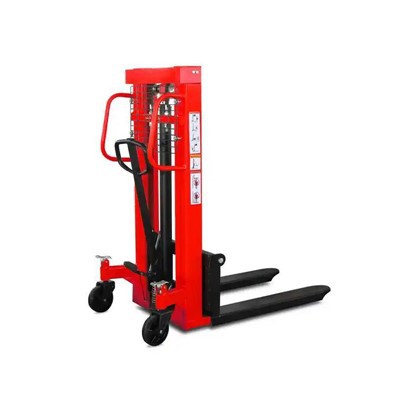
As a supplier of Manual Stacker Lifters, I often encounter various inquiries from customers, one of the most frequent being whether a Manual Stacker Lifter can be used for lifting items with a high center of gravity. This is a crucial question that demands a comprehensive and scientific response. In this blog post, I'll delve into this topic, exploring the feasibility, considerations, and best practices for using Manual Stacker Lifters with high - center - of - gravity items.
Understanding Manual Stacker Lifters
Before we discuss the suitability of Manual Stacker Lifters for high - center - of - gravity items, let's first understand what Manual Stacker Lifters are. Manual Stacker Lifters are essential tools in warehouses, factories, and various industrial settings. They are designed to lift, move, and stack pallets and other heavy items manually. There are different types of Manual Stacker Lifters available on the market, such as the Hydraulic Manual Stacker, Hand Forklift Manual Stacker Pallet Lifter, and Manual Stackershand Forklift Manual Stacker. These stackers typically operate using a hydraulic system, which allows for relatively easy lifting of heavy loads.
Can Manual Stacker Lifters Lift High - Center - of - Gravity Items?
The short answer is yes, Manual Stacker Lifters can be used to lift items with a high center of gravity, but with significant precautions. Items with a high center of gravity are inherently unstable, as their weight is concentrated at a higher point above the base. When using a Manual Stacker Lifter to lift such items, the risk of tipping or toppling increases significantly.
Feasibility Factors
- Load Capacity: First and foremost, the Manual Stacker Lifter must have a sufficient load capacity to handle the weight of the high - center - of - gravity item. Exceeding the load capacity can lead to mechanical failures and pose a serious safety hazard. Before attempting to lift any item, it's crucial to check the stacker's load capacity rating and ensure that the item's weight, including any packaging or attachments, is within the specified limit.
- Base Stability: The base of the Manual Stacker Lifter plays a vital role in maintaining stability when lifting high - center - of - gravity items. A wider base provides more stability, reducing the risk of tipping. Some Manual Stacker Lifters are designed with adjustable or wider bases to enhance stability, especially when dealing with challenging loads.
- Fork Design: The design of the forks also affects the ability to lift high - center - of - gravity items. Forks should be long enough to provide adequate support for the item, and they should be positioned correctly to distribute the weight evenly. Incorrect fork placement can cause the item to shift during lifting, increasing the risk of instability.
Considerations When Lifting High - Center - of - Gravity Items
When using a Manual Stacker Lifter to lift high - center - of - gravity items, several considerations must be taken into account to ensure safety and efficiency.
Safety Precautions
- Operator Training: Proper training is essential for operators who will be using Manual Stacker Lifters to lift high - center - of - gravity items. Operators should be familiar with the stacker's controls, load capacity, and safety features. They should also be trained on how to assess the stability of the load and how to handle potential emergencies.
- Inspection: Before each use, the Manual Stacker Lifter should be thoroughly inspected for any signs of damage or wear. This includes checking the hydraulic system, forks, wheels, and brakes. Any defective parts should be repaired or replaced immediately to prevent accidents.
- Load Securement: High - center - of - gravity items should be secured properly to the forks of the Manual Stacker Lifter. This can be done using straps, chains, or other appropriate securing devices. Securing the load helps prevent it from shifting during lifting and reduces the risk of tipping.
Environmental Factors
- Floor Conditions: The condition of the floor where the Manual Stacker Lifter will be operating is crucial. Uneven or slippery floors can increase the risk of instability, especially when lifting high - center - of - gravity items. Before using the stacker, the floor should be inspected for any obstacles, bumps, or spills, and appropriate measures should be taken to ensure a safe working surface.
- Space Constraints: Adequate space is required when lifting high - center - of - gravity items. The area should be free of any obstructions that could interfere with the movement of the stacker or cause the load to tip. Additionally, there should be enough clearance around the stacker to allow for safe maneuvering.
Best Practices for Lifting High - Center - of - Gravity Items
To minimize the risks associated with lifting high - center - of - gravity items using a Manual Stacker Lifter, the following best practices should be followed.
Load Assessment
- Center of Gravity Analysis: Before attempting to lift an item, it's important to analyze its center of gravity. This can be done by visually inspecting the item and estimating where the majority of its weight is concentrated. If possible, the item should be repositioned or adjusted to lower its center of gravity.
- Weight Distribution: The weight of the item should be distributed evenly across the forks of the Manual Stacker Lifter. This can be achieved by adjusting the position of the item on the forks or by using additional support devices.
Lifting Process
- Slow and Steady: When lifting a high - center - of - gravity item, the operator should use slow and steady movements. Rapid or jerky movements can cause the load to shift and increase the risk of tipping. The stacker should be operated at a speed that allows the operator to maintain control at all times.
- Monitoring: Throughout the lifting process, the operator should continuously monitor the stability of the load. If any signs of instability are detected, such as tilting or shifting, the lifting operation should be stopped immediately, and the load should be re - adjusted.
Conclusion
In conclusion, Manual Stacker Lifters can be used to lift items with a high center of gravity, but it requires careful planning, proper training, and strict adherence to safety precautions. As a supplier of Manual Stacker Lifters, we understand the importance of providing our customers with the right information and products to ensure safe and efficient operations. If you have any questions or need further advice on using Manual Stacker Lifters for high - center - of - gravity items, please feel free to contact us for a detailed discussion and potential procurement. We are committed to helping you find the best solutions for your lifting needs.


References
- Industrial Truck Association. Manual Stacker Safety Guidelines.
- OSHA (Occupational Safety and Health Administration). Forklift Safety Standards.