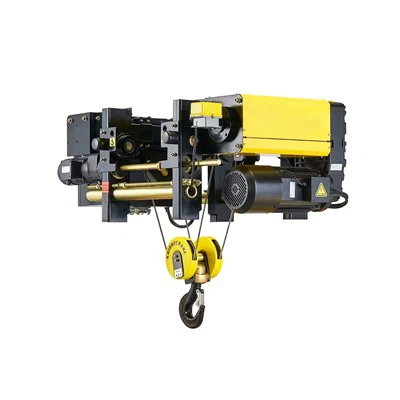
Hey there! As a supplier of European Type Hoists, I'm super excited to dive into the technical parameters of these amazing machines. European Type Hoists are known for their high - end performance, reliability, and advanced design. Let's take a detailed look at what makes them stand out.
1. Lifting Capacity
The lifting capacity of European Type Hoists can vary widely. They can range from as low as 0.5 tons to as high as 80 tons. For light - duty applications like small workshops or laboratories, a hoist with a 0.5 - 5 tons capacity might be sufficient. For heavy - duty industrial settings such as steel mills or large manufacturing plants, hoists with capacities of 20 tons or more are often required. For example, our European Type Double Girder Wire Rope Hoist comes in a variety of lifting capacities to meet different customer needs.
2. Lifting Height
Lifting height is another crucial parameter. It refers to the vertical distance that the hoist can lift the load. European Type Hoists typically offer lifting heights from 3 meters to 30 meters or even more, depending on the specific model. In a multi - story warehouse, a hoist with a greater lifting height might be needed to move goods between different floors. On the other hand, in a low - ceiling workshop, a hoist with a shorter lifting height would be more appropriate.
3. Lifting Speed
There are usually two types of lifting speeds: single - speed and variable - speed. Single - speed hoists have a fixed lifting speed, which is suitable for applications where a constant speed is sufficient. Variable - speed hoists, however, offer more flexibility. They can adjust the lifting speed according to the load and the specific operation requirements. For instance, when lifting a heavy load, a slower speed can ensure stability, while a lighter load can be lifted at a faster speed. Our European Type Wire Rope Hoist provides both single - speed and variable - speed options.
4. Trolley Speed
The trolley speed determines how fast the hoist can move horizontally along the beam. Similar to the lifting speed, it can also be single - speed or variable - speed. Trolley speeds generally range from 2 m/min to 40 m/min. A higher trolley speed is beneficial for large - scale workshops where quick movement of the hoist is required to increase efficiency.
5. Duty Cycle
The duty cycle is an important indicator of the hoist's durability and reliability. It represents the ratio of the working time to the total time in a given period. European Type Hoists usually have different duty cycles, such as M3 (medium - duty), M4 (heavy - duty), and M5 (extra - heavy - duty). A higher duty cycle means the hoist can work continuously for a longer time without overheating or suffering from excessive wear. In a 24/7 operation factory, a hoist with a high - duty cycle like M5 would be a better choice.
6. Power Supply
European Type Hoists are designed to work with different power supplies. The most common power supply voltages are 220V, 380V, 400V, and 415V, with a frequency of 50Hz or 60Hz. It's important to choose the right power supply according to the local electrical grid and the specific requirements of the application.
7. Motor Power
The motor power of the hoist is directly related to its lifting capacity and speed. Generally, a higher lifting capacity and speed require a more powerful motor. The motor power of European Type Hoists can range from a few kilowatts to tens of kilowatts. For example, a small - capacity hoist might have a motor power of 1.5kW, while a large - capacity hoist could have a motor power of 30kW or more.
8. Rope Diameter and Length
The rope diameter and length are also important technical parameters. The rope diameter depends on the lifting capacity of the hoist. A larger lifting capacity usually requires a thicker rope to ensure safety. The rope length is related to the lifting height. Our European Girder Crane Electric Wire Rope Hoist is equipped with high - quality ropes with appropriate diameters and lengths for different models.
9. Safety Devices
European Type Hoists are equipped with a variety of safety devices to ensure the safety of operators and the load. Some common safety devices include overload protection devices, limit switches, and emergency stop buttons. The overload protection device can prevent the hoist from lifting a load that exceeds its rated capacity, which can avoid damage to the hoist and potential accidents. Limit switches are used to control the upper and lower limits of the lifting movement, preventing the hoist from over - traveling. The emergency stop button allows the operator to stop the hoist immediately in case of an emergency.
10. Noise Level
In modern industrial environments, noise pollution is a concern. European Type Hoists are designed to operate with relatively low noise levels. Thanks to advanced design and high - quality components, they can work quietly, which is beneficial for the working environment and the health of operators.


In conclusion, European Type Hoists are highly versatile and reliable lifting equipment with a wide range of technical parameters. Whether you need a hoist for a small - scale operation or a large - scale industrial project, there's a European Type Hoist that can meet your requirements.
If you're interested in our European Type Hoists or have any questions about the technical parameters, don't hesitate to contact us for further discussion and negotiation. We're here to provide you with the best solutions for your lifting needs.
References
- Crane Manufacturer's Handbook: This handbook provides comprehensive information on the design, operation, and technical parameters of various types of cranes and hoists.
- Industry Standards and Regulations: These standards ensure the safety and performance of European Type Hoists and are important references for understanding their technical parameters.