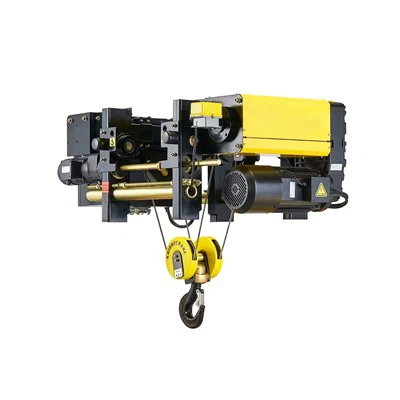
Hey there! As a supplier of electric wire rope hoists, I've seen firsthand how crucial it is to keep the wire rope tension just right. In this blog, I'll share some tips on how to adjust the tension of the wire rope in an electric wire rope hoist.
First off, why is proper wire rope tension so important? Well, if the tension is too loose, the wire rope can slip, causing the load to drop unexpectedly. That's a huge safety hazard! On the other hand, if the tension is too tight, it can put extra stress on the hoist's components, leading to premature wear and tear. So, finding that sweet spot is key.


Tools You'll Need
Before we dive into the adjustment process, let's talk about the tools you'll need. You'll typically need a set of wrenches, a tension gauge, and a tape measure. The wrenches are for loosening and tightening the nuts and bolts, the tension gauge helps you measure the tension accurately, and the tape measure is for checking the length of the wire rope.
Step 1: Inspect the Hoist
Before making any adjustments, it's important to inspect the hoist thoroughly. Check for any signs of damage or wear on the wire rope, such as fraying, kinking, or broken strands. Also, look at the drums, sheaves, and other components to make sure they're in good condition. If you notice any issues, it's best to address them before adjusting the tension.
Step 2: Determine the Ideal Tension
The ideal tension for the wire rope depends on several factors, including the type of hoist, the load capacity, and the working conditions. You can usually find the recommended tension in the hoist's user manual. If you don't have the manual, you can contact the manufacturer or a professional technician for guidance.
Step 3: Loosen the Fasteners
Once you've determined the ideal tension, it's time to start making adjustments. Begin by loosening the fasteners that hold the wire rope in place. This could be nuts, bolts, or clamps, depending on the design of your hoist. Use the appropriate wrenches to loosen them just enough to allow the wire rope to move.
Step 4: Measure the Tension
With the fasteners loosened, use the tension gauge to measure the current tension of the wire rope. Make sure the gauge is properly calibrated and positioned on the wire rope at a point where it's straight and not under any stress. Take multiple measurements at different points along the wire rope to get an accurate reading.
Step 5: Adjust the Tension
Based on the measurements you took, you can now adjust the tension of the wire rope. If the tension is too low, you'll need to tighten the wire rope. To do this, carefully pull the wire rope taut and then tighten the fasteners. If the tension is too high, you'll need to loosen the wire rope. Loosen the fasteners and allow the wire rope to relax slightly.
Step 6: Recheck the Tension
After making the adjustments, recheck the tension using the tension gauge. Make sure the tension is within the recommended range. If it's still not right, repeat steps 5 and 6 until you achieve the desired tension.
Step 7: Tighten the Fasteners
Once you're satisfied with the tension, tighten the fasteners securely. Make sure they're tightened to the correct torque specification to prevent them from coming loose during operation.
Step 8: Test the Hoist
Finally, it's time to test the hoist to make sure everything is working properly. Lift a light load and observe the operation of the hoist. Pay attention to how the wire rope moves and whether there are any unusual noises or vibrations. If everything looks and sounds good, you're good to go!
Some Additional Tips
- Regular Maintenance: Adjusting the wire rope tension is just one part of maintaining your electric wire rope hoist. Make sure to follow the manufacturer's recommended maintenance schedule, which may include lubrication, inspection, and replacement of worn parts.
- Safety First: Always wear appropriate safety gear, such as gloves and safety glasses, when working on the hoist. And never attempt to adjust the tension while the hoist is under load.
- Seek Professional Help: If you're not confident in your ability to adjust the wire rope tension, or if you encounter any problems during the process, don't hesitate to seek the help of a professional technician.
As a supplier of electric wire rope hoists, we offer a wide range of high-quality products to meet your needs. Check out our M5 Electric Wire Rope Hoist With Trolley, Movable Electric Wire Rope Hoist With Trolley, and Hoist Fixed 3.2 Ton Electric Wire Rope Hpist. If you're interested in purchasing an electric wire rope hoist or have any questions about wire rope tension adjustment, feel free to contact us. We're here to help you make the right choice and ensure the safe and efficient operation of your hoist.
References
- Manufacturer's user manuals for electric wire rope hoists
- Industry standards and guidelines for wire rope tension adjustment